

While most people associate muscle gain with consuming animal proteins, plant-based athletes are shattering that myth with strategic nutritional approaches. You’ll discover that building muscle on a vegan diet isn’t just possible—it’s highly effective when done right. Protein isn’t solely the domain of meat-eaters, and your muscle-building potential hinges on understanding key nutritional principles. If you’re curious about transforming your physique without animal products, this guide will unpack the science and strategies that can help you optimize your plant-powered performance.
Key Takeaways
- Focus on high-protein vegan foods like seitan, tempeh, lentils, and tofu to ensure adequate protein intake for muscle growth.
- Create meal plans with 30-35 grams of plant-based protein per serving, targeting a caloric surplus of 10-20% above maintenance levels.
- Combine diverse plant proteins to achieve complete essential amino acids, using complementary protein sources like legumes and grains.
- Incorporate nutrient-dense, high-calorie foods such as nuts, seeds, avocados, and vegan protein powders to support muscle building.
- Supplement strategically with creatine monohydrate, vegan omega-3s, vitamin B12, and plant-based protein powders to optimize muscle gain.
Understanding Vegan Muscle-Building Nutrition
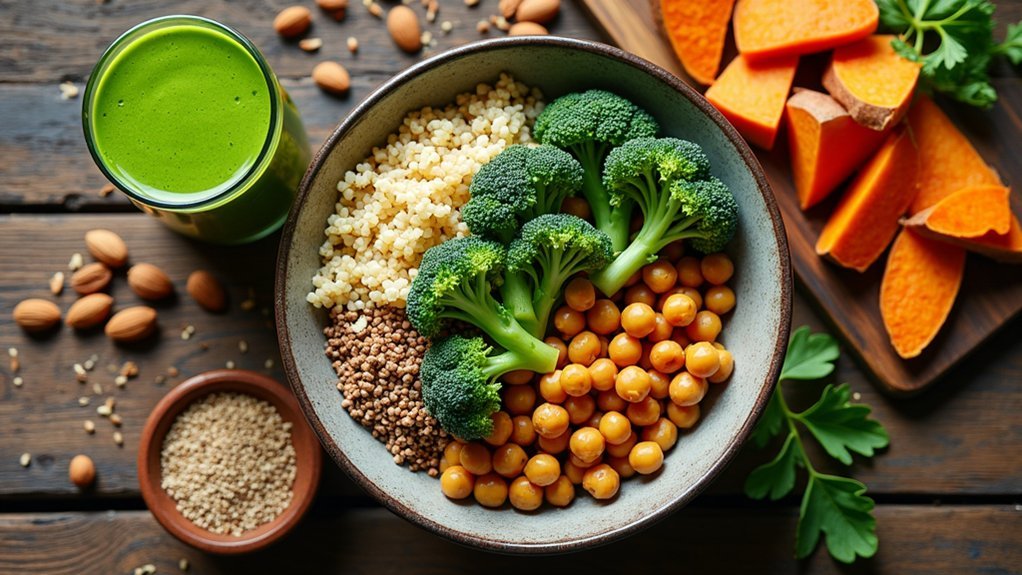
While many believe muscle gain requires animal protein, vegan athletes can effectively build muscle through strategic nutritional planning. By understanding key principles of plant-based muscle development, you’ll optimize your protein intake and muscle-building potential. A vegan diet demands precise attention to essential amino acids, requiring 1.6 to 2.2 grams of protein per kilogram of body weight daily. High-protein vegan foods like seitan, tempeh, lentils, and tofu become your nutritional allies. Creating a caloric surplus of 10-20% above maintenance levels guarantees muscle growth, with carbohydrate intake of 5-7 grams per kilogram supporting training intensity and recovery. Successful vegan muscle gain hinges on thorough meal plans that strategically combine diverse plant-based proteins, complex carbohydrates, and healthy fats to fuel performance and muscle development.
Essential Protein Sources for Plant-Based Athletes
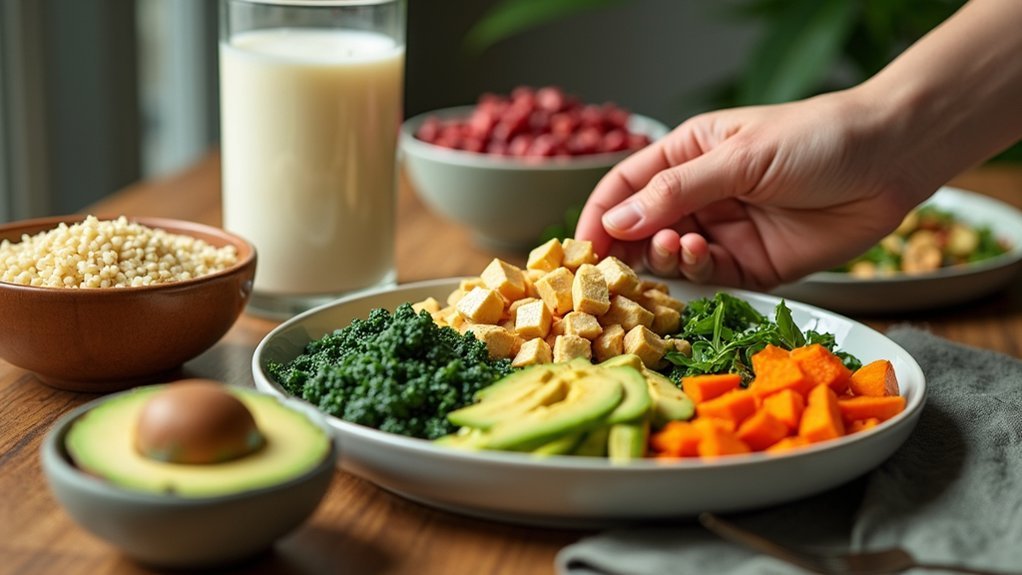
Building muscle on a plant-based diet requires strategic protein selection and thorough nutritional knowledge. Your protein intake should range from 1.6 to 2.2 grams per kilogram of body weight, focusing on diverse, high-protein foods that support muscle growth.
Key plant protein sources include:
- Seitan’s impressive 34 grams per 1/2 cup
- Tempeh’s complete protein profile
- Lentils packed with 18 grams per cup
- Soy products like tofu and edamame
- Beans and legumes offering essential amino acids
Nutritional supplements like vegan protein powders can effectively bridge protein gaps around workouts. By combining whole food sources and targeted supplements, plant-based athletes can optimize their essential amino acid intake, ensuring robust muscle development and performance without compromising nutritional quality.
Crafting a High-Protein Vegan Meal Strategy
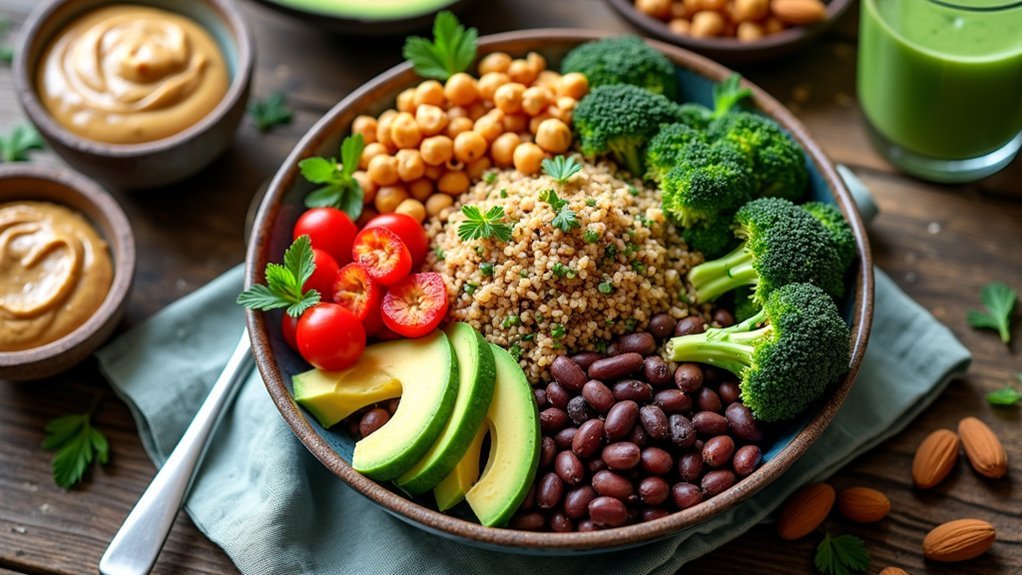
Because muscle gain demands strategic nutritional planning, vegan athletes must design a high-protein vegan meal plan that optimizes muscle protein synthesis and supports training goals. Your strategy should prioritize diverse protein sources, targeting 0.7–1.0 grams of protein per serving and ensuring each main meal contains 30-35 grams of plant-based protein. Integrate nutritional needs through seitan, tofu, legumes, and quinoa while maintaining a caloric surplus of 10-20% above maintenance levels.
Supplement your approach with vegan protein powder around workouts to enhance protein intake. By incorporating essential nutrients from nuts, avocados, and dried fruits, you’ll support muscle gain effectively. A well-structured meal strategy requires flexibility, balance, and intentional protein consumption to maximize athletic performance and muscle development.
Nutritional Supplements for Optimal Performance
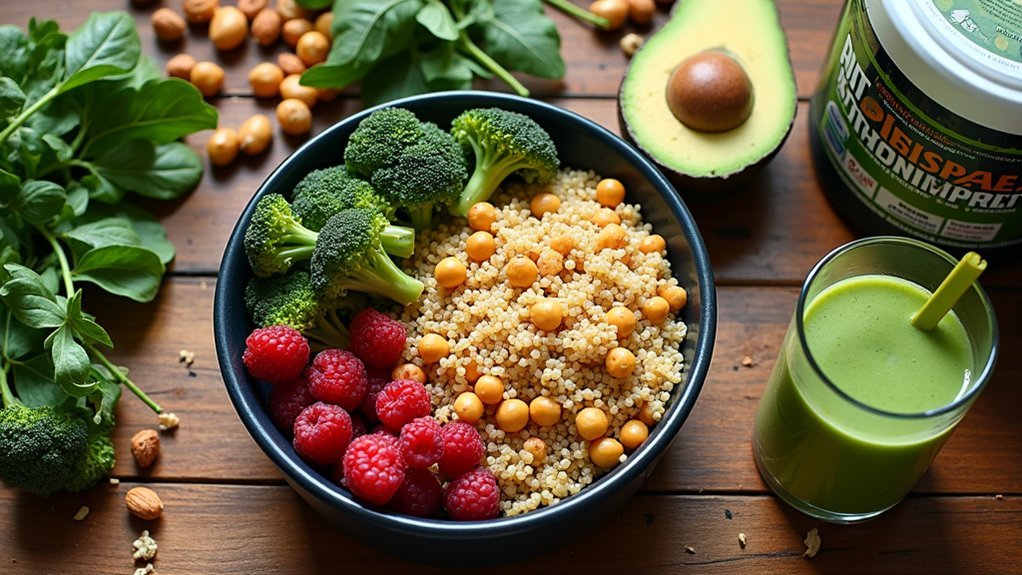
As vegan athletes pursue muscle gain, strategic supplementation becomes critical for bridging nutritional gaps and optimizing performance. Your supplement strategy should focus on targeted nutritional support that enhances muscle growth and recovery. Key vegan protein powders and targeted nutrients can transform your athletic potential.
Key supplements to take into account include:
- Creatine monohydrate for explosive strength gains
- Vegan omega-3 fatty acids to reduce training inflammation
- Vitamin B12 for sustained energy metabolism
- Plant-based protein powders supporting muscle protein synthesis
- Extensive vegan multivitamins addressing potential nutrient gaps
Choosing high-quality nutritional supplements guarantees you’re meeting demanding athletic requirements. These evidence-based additions support muscle growth, optimize energy metabolism, and fill critical nutrient deficiencies common in plant-based diets. By strategically incorporating these supplements, you’ll maximize your vegan muscle-building potential and athletic performance.
7-Day Muscle-Building Meal Plan Breakdown
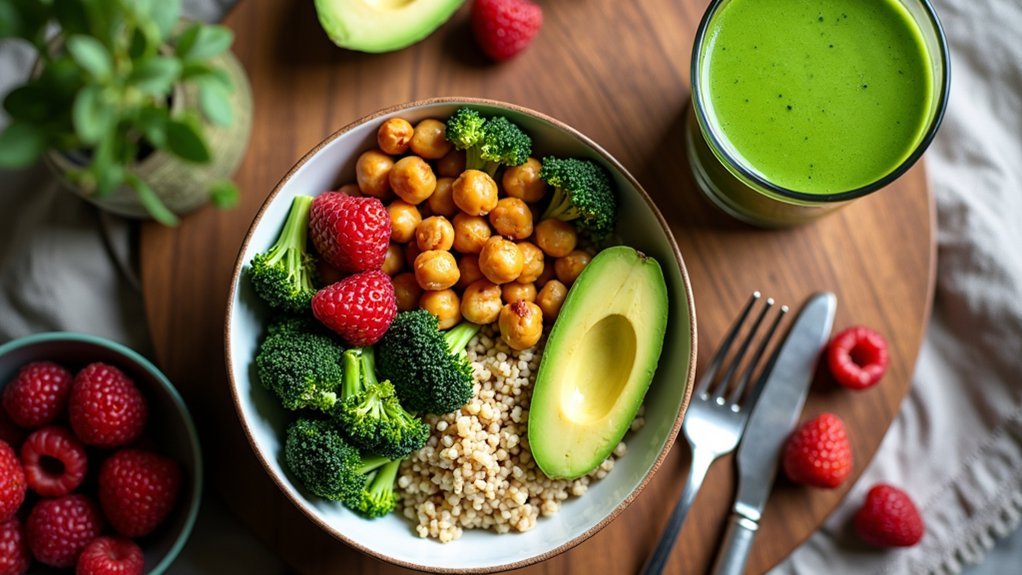
While strategic nutrition forms the foundation of muscle gain, a well-structured daily meal plan transforms theoretical knowledge into tangible results. Your vegan muscle-building diet requires carefully calculated protein intake from diverse sources like legumes, whole grains, and plant proteins to support muscle growth. Aim for 30-35 grams of protein per main meal, incorporating high-protein vegan foods such as tempeh, seitan, and lentils to meet your 1.6-2.2 grams per kilogram body weight requirement. By batch cooking and prepping meals in advance, you’ll guarantee consistent calorie and protein intake. Diversifying protein sources assures you’ll consume all essential amino acids necessary for muscle repair. Your meal plan should balance macronutrients, prioritize whole foods, and strategically time protein consumption to maximize muscle-building potential.
Meal Preparation Tips for Vegan Bodybuilders
Scaling up from individual meal planning, effective meal preparation becomes the linchpin for vegan bodybuilders committed to muscle growth. Your strategy should focus on batch cooking high-protein staples like legumes and whole grains while maximizing nutrient-dense plant-based foods for ideal muscle gain.
Streamline your meal prepping with these critical techniques:
- Invest in quality airtight containers for systematic meal storage
- Freeze individual portions of protein-rich soups and stews
- Utilize frozen produce to extend ingredient shelf life
- Chop vegetables and prepare sauces in advance
- Batch cook multiple protein-packed meals simultaneously
Overcoming Common Challenges in Vegan Muscle Gain
Building muscle on a vegan diet presents unique nutritional challenges that demand strategic planning and informed nutrition. You’ll need to carefully combine plant-based proteins like legumes, tofu, and seitan to guarantee you’re consuming complete essential amino acids. Achieving a caloric surplus becomes vital, requiring intentional inclusion of high-calorie options such as nuts and avocados to support muscle gain. Proactively addressing potential nutrient deficiencies through targeted supplements and fortified foods is essential for maintaining peak performance. Meal planning emerges as a key strategy, helping you systematically track protein intake and meet the recommended 1.6 to 2.2 grams per kilogram of body weight. By understanding these challenges and implementing targeted nutritional approaches, you can effectively build muscle on a plant-based diet.
Frequently Asked Questions
Is It Possible to Build Muscle on a Plant-Based Diet?
You’ll absolutely build muscle on a plant-based diet by strategically combining protein sources, timing nutrients, maintaining a calorie surplus, and debunking dietary myths through smart strength training and precise amino acid intake like vegan athletes.
What Do Plant-Based Bodybuilders Eat?
You’ll fuel gains with tofu, seitan, and quinoa, crushing vegan protein sources through strategic meal prepping. Post-workout smoothies, nutrient-timed supplements, and high-calorie snacks like nuts and avocados help shatter vegetarian bodybuilding myths while building lean muscle.
How to Get 120G Protein a Day Vegetarian?
You’ll nail 120g protein by strategically combining protein-rich foods like tofu, quinoa, lentils, and tempeh. Utilize vegetarian protein shakes, prioritize legume benefits, and time nutrient-dense meals to maximize absorption and support muscle growth effectively.
What Is the Best Meal Plan to Gain Muscle?
Wondering how to sculpt muscle? You’ll need a strategic plan: prioritize diverse protein sources, maintain a calorie surplus, time meals around workouts, prep nutrient-dense meals, and supplement smartly—all while staying hydrated and consistent with your training.
Conclusion
You’ve discovered that plant-based muscle gain isn’t just possible—it’s powerful. Research shows vegan athletes can achieve comparable muscle growth to omnivores, with studies indicating protein quality matters more than source. By strategically combining proteins, supplementing wisely, and maintaining a structured meal plan, you’ll optimize your muscle-building potential. Stay consistent, track your nutrition, and trust the evidence-based approach to vegan strength training.

