
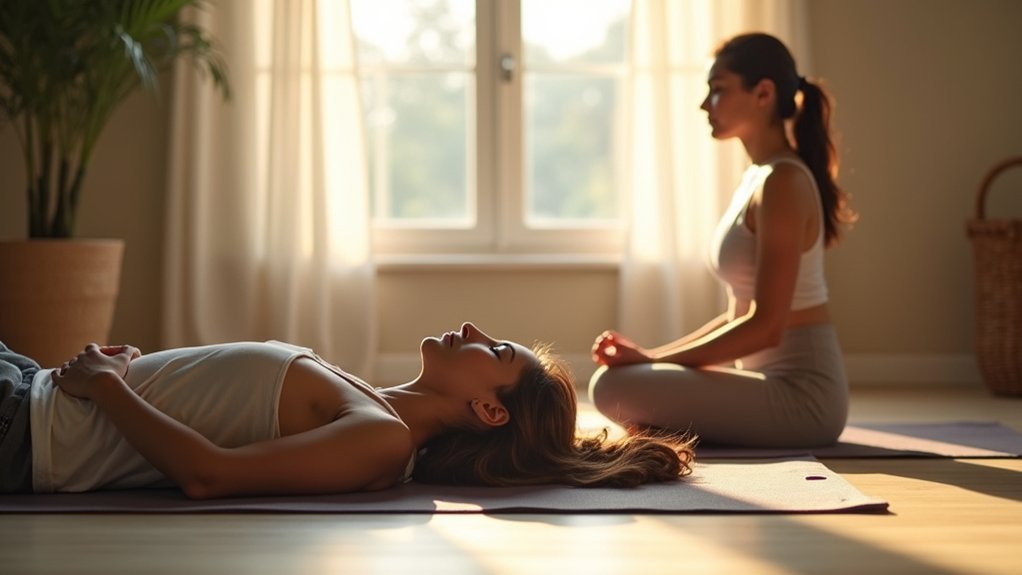
Did you know that over 14% of adults in the United States have tried meditation or yoga practices to improve mental wellness? As you seek strategies for stress reduction and inner peace, you’ll likely encounter two prominent approaches: Yoga Nidra and traditional meditation. While they might seem similar at first glance, these practices diverge markedly in technique and purpose. Understanding their unique characteristics could transform your approach to mental health and self-discovery. What makes each method distinct, and which might be better suited to your personal wellness journey?
Key Takeaways
- Neither practice is universally “better” – effectiveness depends on individual goals, personal preference, and specific mental wellness needs.
- Yoga Nidra offers more accessible entry point for beginners, requiring less active concentration and practiced in a comfortable lying-down position.
- Traditional meditation provides deeper spiritual development and mental discipline, emphasizing active awareness and introspective techniques for long-term psychological growth.
- For stress reduction and sleep improvement, Yoga Nidra demonstrates more immediate therapeutic benefits through guided subconscious exploration and relaxation.
- The optimal approach involves understanding personal objectives and potentially integrating both practices to maximize mental health and inner awareness.
Understanding Meditation and Yoga Nidra
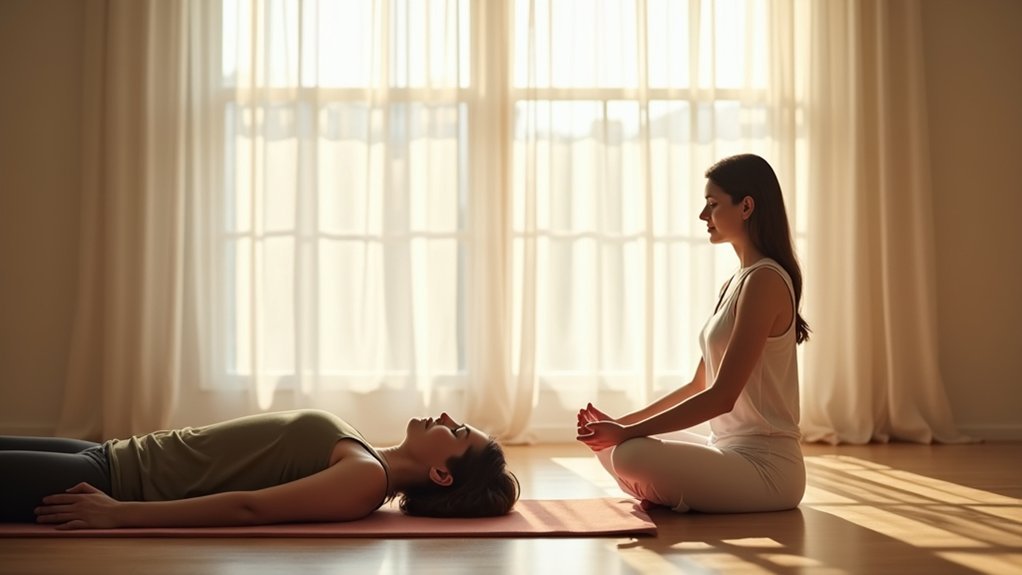
While meditation and Yoga Nidra are often conflated, they represent distinct practices with unique approaches to mental and emotional well-being. Meditation encompasses various techniques focused on cultivating present-moment awareness and mindfulness, typically involving active concentration in a seated position. Yoga Nidra, conversely, is a guided practice designed to induce deep relaxation through systematic engagement with the subconscious mind, usually practiced while lying down. Both practices stand as powerful tools for reducing stress and enhancing mental clarity, yet they differ fundamentally in methodology. Meditation primarily emphasizes conscious awareness and spiritual growth through techniques like focused breathing, while Yoga Nidra utilizes guided visualizations and structured relaxation to access profound states of consciousness. Understanding these nuanced differences can help you select the practice most aligned with your personal wellness goals.
Origins and Traditional Practices
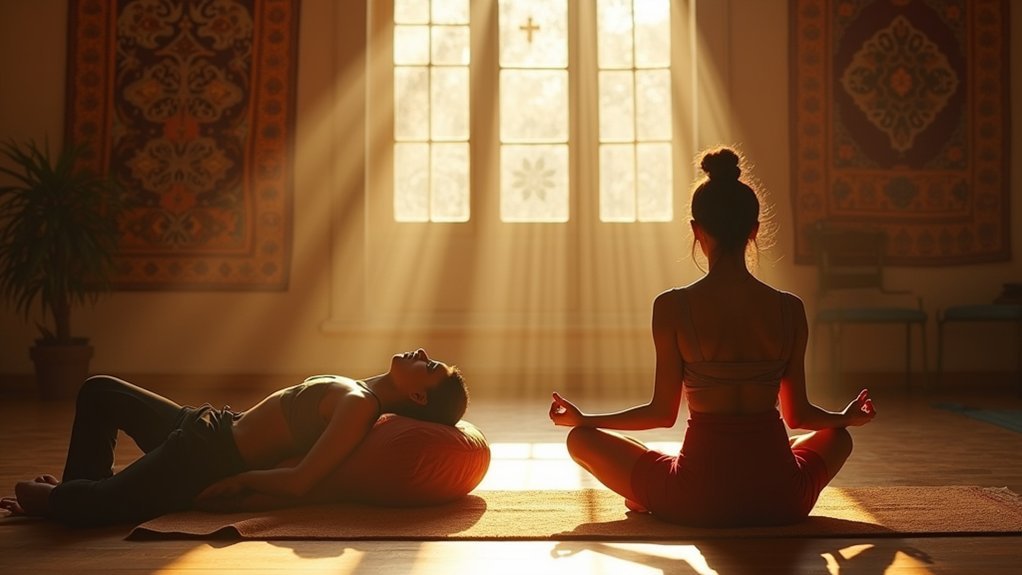
Though rooted in ancient contemplative traditions, Yoga Nidra and traditional meditation diverge considerably in their historical development and philosophical frameworks. While traditional meditation encompasses diverse practices focusing on breath control and mantra repetition across Buddhist and Hindu traditions, Yoga Nidra emerged as a specialized technique within ancient Indian yogic systems, uniquely designed for conscious exploration of deep relaxation states.
Swami Satyananda Saraswati’s 20th-century systematization transformed Yoga Nidra from an esoteric practice into a structured approach emphasizing guided visualizations and consciousness expansion. Traditional meditation, by contrast, prioritizes self-guidance and introspective techniques, requiring active mental engagement. These distinct historical contexts reflect fundamentally different approaches to understanding consciousness, with Yoga Nidra offering a more prescribed pathway toward meditative awareness.
Key Differences in Technique and Approach
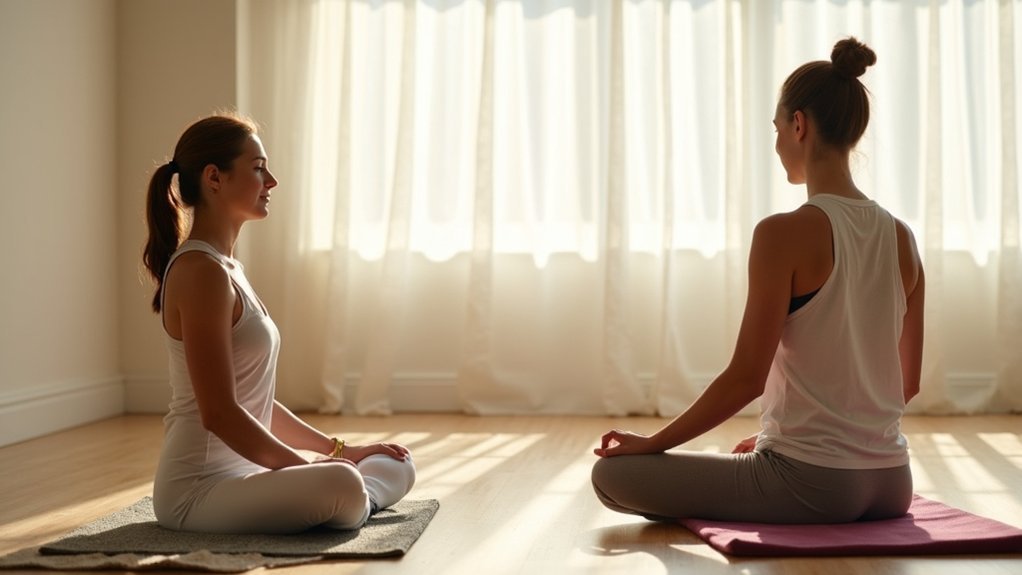
The historical distinctions between Yoga Nidra and traditional meditation manifest most prominently in their core methodological approaches to consciousness exploration. While traditional meditation demands active mental focus and seated positioning, Yoga Nidra offers a more accessible pathway through guided deep relaxation. You’ll find that Yoga Nidra’s technique involves lying down and following structured visualizations, enabling exploration of the subconscious mind with minimal effort. Traditional meditation, by contrast, emphasizes present-moment awareness through breath control and direct concentration. Yoga Nidra’s approach prioritizes emotional release and passive awareness, whereas traditional meditation centers on spiritual growth and mental clarity. These divergent techniques provide practitioners with complementary yet distinct methods of inner investigation, each offering unique insights into conscious awareness and personal transformation.
Health Benefits and Mental Wellness
How do mental wellness practices transform our inner landscape? Yoga Nidra and meditation offer profound pathways to addressing mental health issues, providing targeted strategies for anxiety and depression. While meditation cultivates self-awareness and mindfulness, Yoga Nidra induces a deep state of relaxation that can greatly reduce stress more effectively in certain populations. You’ll find that both practices contribute to emotional balance, but Yoga Nidra uniquely promotes enhanced sleep quality by guiding practitioners into a therapeutic resting state.
The benefits of yoga extend beyond momentary calm, potentially rewiring neural pathways and supporting long-term mental resilience. By systematically engaging in these practices, you’re not just managing symptoms but actively reconstructing your psychological well-being, transforming internal challenges into opportunities for growth and healing.
Practical Applications for Different Needs
While individual wellness needs vary considerably, practitioners can strategically select between Yoga Nidra and traditional meditation based on specific psychological and physiological requirements. If you’re seeking anxiety reduction and improved sleep quality, Yoga Nidra’s guided meditation offers superior accessibility for beginners. Its structured approach enables practitioners to reach deeper states of relaxation more efficiently than traditional meditation, particularly beneficial for high-stress professionals.
Your choice should align with personal goals: Yoga Nidra excels in reducing stress and supporting mental body restoration, while traditional meditation emphasizes spiritual growth. For those with limited time, Yoga Nidra’s shorter sessions provide a pragmatic alternative. Practitioners can even integrate both practices, leveraging Yoga Nidra’s relaxation techniques to enhance overall mindfulness and well-being.
Choosing the Right Practice for You
Wondering which meditative practice best suits your wellness journey? Your choice between Yoga Nidra and traditional meditation depends on critical self-assessment:
- If deep relaxation and stress reduction are paramount, Yoga Nidra’s guided nature provides structured healing
- When seeking present-moment awareness, traditional meditation’s self-disciplined approach cultivates mindfulness
- Your preferred posture influences practice effectiveness – reclined for Yoga Nidra, seated for traditional meditation
- Evaluate your experience level: beginners often find Yoga Nidra more accessible, while seasoned practitioners prefer traditional techniques
- Consider your desired outcome – exploring self-limiting beliefs or developing emotional balance
Analytically examining these factors enables an informed decision aligned with your wellness goals, ensuring you select a meditative practice that resonates with your individual needs and potential for personal transformation.
Combining Yoga Nidra and Meditation
Can integrating Yoga Nidra and traditional meditation reveal transformative wellness potential? By strategically combining these practices, you’ll access synergistic benefits that enhance deep relaxation, mindfulness, and self-awareness. Yoga Nidra’s guided approach provides a foundational framework for developing cognitive function, while traditional meditation cultivates spiritual introspection.
Your holistic wellness journey can leverage both practices to explore layers of consciousness more thoroughly. Alternating between Yoga Nidra and meditation allows targeted interventions—utilizing Yoga Nidra for stress relief and meditation for emotional stability. The complementary nature of these techniques promotes profound personal growth, enabling you to develop a nuanced understanding of your inner landscape.
Expert Insights and Recommendations
Because the intersection of Yoga Nidra and traditional meditation represents a nuanced wellness approach, leading experts recommend strategic, individualized integration based on personal cognitive and emotional needs. Professionals suggest exploring these complementary practices through a tailored lens:
- Assess your current stress levels and mental tension
- Evaluate personal goals for spiritual growth and self-awareness
- Consider time availability for guided versus self-directed practices
- Match meditation techniques to individual anxiety relief requirements
- Experiment with Yoga Nidra as a gateway to deeper traditional meditation
Research validates that combining these approaches can optimize mental wellness. By understanding the unique benefits of deep relaxation and guided practice, you’ll develop a more sophisticated meditation strategy. Experts emphasize that no single technique universally suits all practitioners, encouraging a personalized, adaptive approach to mental and spiritual development.
Frequently Asked Questions
What Is Better, Yoga Nidra or Meditation?
Neither practice is universally “better” – you’ll benefit from both. Choose Yoga Nidra for stress reduction and sleep improvement, or traditional meditation for deeper mindfulness and spiritual growth. Your personal wellness goals and preferences determine the most effective approach.
When Should You Not Do Yoga Nidra?
You shouldn’t practice Yoga Nidra if you’ve severe mental health disorders, unresolved trauma, epilepsy, or significant sleep disruptions without professional guidance. Consider your mental state, physical conditions, and emotional readiness before engaging in this profound meditative practice.
Which Is Better Meditation or Yoga?
Like rivers converging, meditation and yoga intertwine to nurture your mindfulness benefits. Both offer stress reduction, mental clarity, and personal development. Your ideal practice depends on individual goals, blending relaxation techniques for holistic emotional balance and spiritual growth.
Can Christians Do Yoga Nidra?
Christians can explore Yoga Nidra’s mindfulness benefits, aligning its relaxation techniques with spiritual experiences that nurture inner peace, without compromising religious perspectives. By focusing on personal growth and mental health, you’ll find it supportive of Christian beliefs.
What Is 30 Minutes of Yoga Nidra Equivalent To?
Like a deep well of rejuvenation, 30 minutes of Yoga Nidra can equate to several hours of sleep, offering profound stress relief, mental clarity, and energy restoration through guided relaxation techniques and mindful body awareness.
Conclusion
Both Yoga Nidra and traditional meditation are powerful tools that can transform your mental landscape, like a gardener carefully cultivating inner peace. Your choice depends on personal wellness goals—whether you’re seeking deep relaxation or mindful awareness. Rather than viewing them as competing practices, consider them complementary approaches to holistic well-being. By understanding their unique attributes and potential synergies, you’ll be better equipped to develop a personalized meditation strategy that nurtures your mind, body, and spirit.

